
Services · AI SaaS Product Development
AI SaaS Product Development Company for Startups from first architecture decision to production deployment. Not prototypes. Not proof-of-concepts. Production systems with real users.
If you are a founder with domain expertise and a product vision, TechEniac becomes your technical team. We architect your system, build the product, integrate the AI layer, and stay with you as it scales.
AI SaaS product development is the process of building a software-as-a-service platform where artificial intelligence is integrated into the core product architecture — not bolted on as a feature. This includes AI-powered capabilities like intelligent search, automated workflows, LLM-powered assistants, RAG systems, and predictive analytics, all built on scalable SaaS infrastructure with multi-tenancy, subscription billing, and cloud deployment.
The difference between a standard SaaS product and an AI SaaS product is architectural. AI requires vector databases, model orchestration layers, prompt management, embedding pipelines, and cost-optimized inference — none of which exist in traditional SaaS architecture. TechEniac builds these from day one, not as patches later.
Capabilities
Full-lifecycle SaaS products where AI is the core value proposition. Healthcare platforms with AI medical assistants. FinTech tools with AI-powered document intelligence. MarTech systems with automated content verification. These are not products with an AI chatbot added in the corner — the entire product is designed around AI capabilities.
For founders still validating their idea or defining the product, TechEniac provides AI product consulting focused on feasibility, architecture decisions, and go-to-market clarity. This includes use-case validation, accuracy requirement definition, data strategy, and selecting the right AI approach (RAG, fine-tuning, or agents). Most costly mistakes in AI products happen before development starts — this stage ensures you build the right product before writing a single line of code.
For companies that already have a working product, TechEniac helps integrate and augment AI capabilities into existing systems. This includes embedding LLMs into workflows, connecting AI to internal data sources, automating manual processes, and enhancing decision-making with AI-driven insights. The goal is not just adding AI but making it meaningfully improve user experience, efficiency, or revenue.
Intelligent search, AI assistants, automated data extraction, content generation, and smart recommendations integrated into your existing SaaS product without rebuilding. TechEniac works with OpenAI, Claude, Gemini, Llama, and Mistral to add production-grade AI features that your users actually interact with.
Autonomous AI systems that plan, execute, verify, and self-correct. TechEniac has built multi-agent architectures using LangGraph where multiple AI agents collaborate — one generates a response, another fact-checks it, another formats it. This is how SolidHealth AI achieved 95%+ medical accuracy in production.
Retrieval-Augmented Generation connects LLMs to your proprietary data so the AI responds with accurate, grounded answers instead of hallucinations. TechEniac has deployed production RAG pipelines processing 500+ page documents with 90%+ accuracy and direct source citations.
Multi-tenant architecture, subscription billing, role-based access control, API design, webhook integrations, and cloud infrastructure on AWS or GCP. Every AI SaaS product TechEniac builds ships on production-grade infrastructure designed to scale from 100 to 100,000 users.
Delivery Process
A structured product development lifecycle. Every AI SaaS product goes through these four phases, adapted to your stage and scope.
Requirements prioritized. Architecture designed. AI model and infrastructure decisions locked. UI/UX wireframes for core flows. Sprint plan with milestones. Budget confirmed.
System architecture, database schema, AI pipeline design, API contracts, and UI/UX design. This is where TechEniac decides which LLM provider, which vector database, how to structure the data pipeline, and how components communicate.
Two-week agile sprints. Working software at the end of every sprint. You see demos, give feedback, and the team adjusts. AI integration happens in parallel with product development — not as a separate phase.
QA testing, staging review, production deployment, monitoring setup. 30 days of post-launch support included. Most founders continue into ongoing development after launch.
Tech Stack
A consistent core stack across every AI SaaS project. Every engineer already has deep context — no learning curve on your project. Technology serves the product, not the other way around.
| Layer | Technologies |
|---|---|
| Frontend | Next.js, TypeScript, Tailwind CSS, React Native |
| Backend | Node.js, Python, FastAPI, NestJS, GraphQL |
| AI / ML | OpenAI (GPT-4), Claude, Gemini, Llama, Mistral, LangChain, LangGraph, LlamaIndex, PyTorch |
| Vector DB | Pinecone, Weaviate, Qdrant, Supabase Vector |
| Database | MongoDB, PostgreSQL, Redis, Firestore |
| Cloud | AWS (EC2, S3, Lambda, ECS), GCP (Cloud Run, Vertex AI), Docker, Kubernetes |
| DevOps | CI/CD pipelines, GitHub Actions, monitoring (Prometheus, Grafana) |
For a complete budget breakdown, see our SaaS Development Cost guide.
Proof, Not Pitch
Not hypothetical capabilities. Production systems serving real users.

AI-powered health companion integrating with 25,000+ healthcare providers via FHIR. Multi-agent LangGraph architecture with self-correcting fact-checking. Dynamic LLM switching between Gemini and Llama 3.3 for cost optimization.
Results: 95%+ medical accuracy. 40% cost reduction. HIPAA compliant. Integration with Epic, Cerner, Allscripts.
Read the case study →
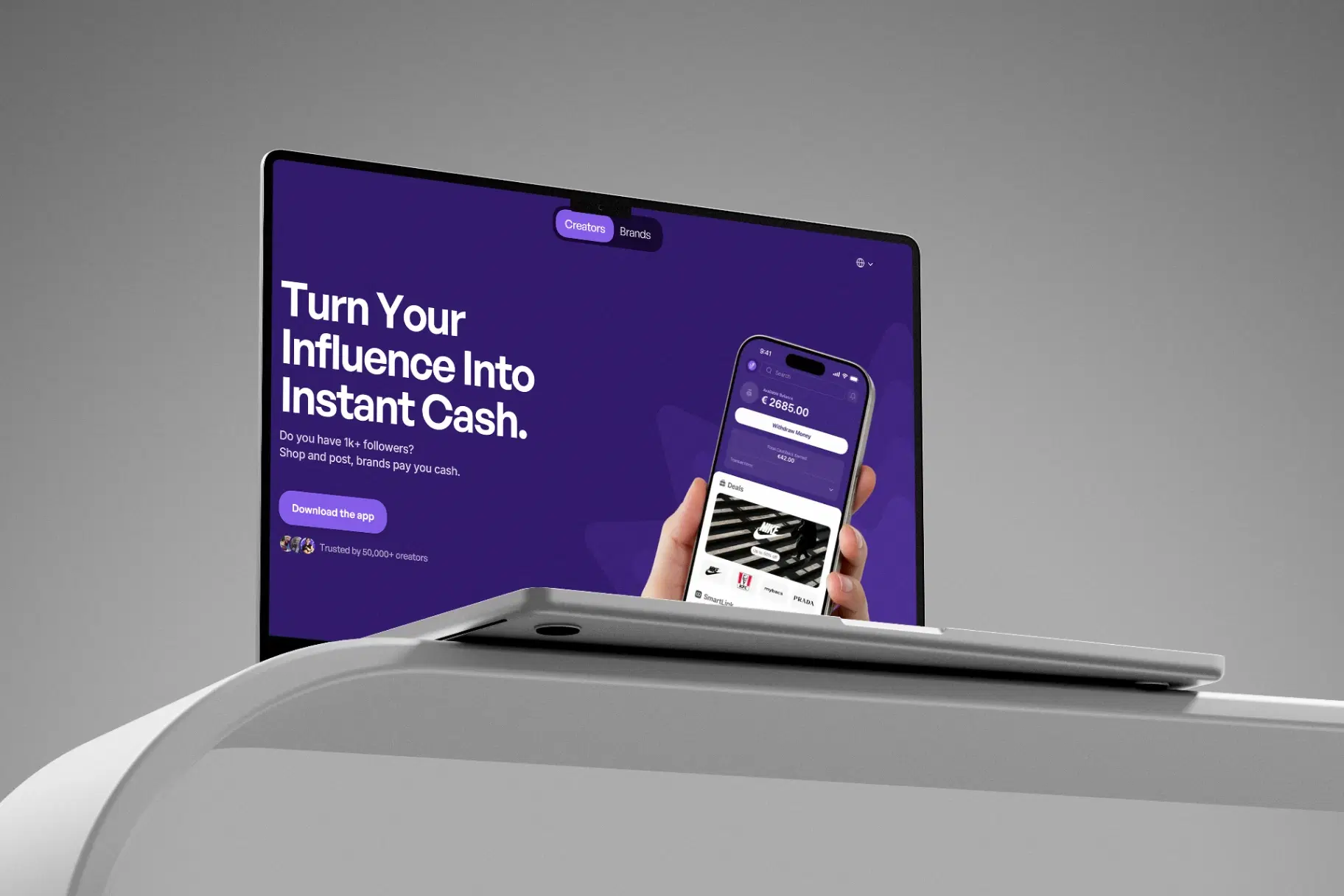
Smart link engine with <200ms global response time. AI content verification using Gemini vision models. Bulk link generation processing hundreds of smart links in minutes. Microservices on AWS Kubernetes.
Results: 10,000+ creators. 50% engagement increase. 97% setup time reduction. 99.9% uptime.
Read the case study →
Portfolio-based social platform for blue-collar workers. AI-powered post generation from uploaded work images. Search and discovery module. Built for non-tech-savvy users who have never used a portfolio app.
Read the case study →
RAG-powered platform for mortgage underwriting. Processes 500+ page PDFs, scanned images, and video modules. Grounded answers with page citations. Serverless AWS Lambda architecture.
Results: 85% faster retrieval. 90%+ compliance accuracy. 3x document capacity. 35% infrastructure savings.
Read the case study →Why TechEniac
TechEniac engineers work with LangChain, LangGraph, Pinecone, Qdrant, and production LLM APIs daily. We have shipped multi-agent systems, RAG pipelines, vision transformers, and real-time AI streaming. This is not a capability we are exploring — it is what we do.
Every engineer has deep context in multi-tenancy, subscription billing, role-based access, and SaaS scaling patterns. You are not educating our team on how SaaS works.
TechEniac will tell you which features to cut from your MVP. We will tell you if your budget does not match your scope. We will recommend reducing our own team size if your project does not require that many engineers. Honesty protects your budget. That is why 98% of clients stay.
30 days post-launch support included. Most clients continue into ongoing partnerships. TechEniac's average client relationship: 18+ months. The first project builds trust. Everything after building the product.
Common questions founders ask before we start an AI SaaS project.
Book a free 30-minute strategy session. TechEniac will review your product idea, discuss architecture options, and map a realistic path from idea to launch. No pitch. Just an engineering conversation.